Hydroplaning Vehicle Lands 75 Feet Back In The Ashe Juniper Off IH-10; No Injuries
A westbound vehicle hydroplaned on IH-10 Sunday and ended up about 75 feet back in the Ashe juniper. No one was hurt. Here's how to keep it from happening to you.
City of Kerrville Police Department
KERRVILLE — It doesn't take much water for a car to stop being a car and start being a sled. One westbound driver on IH-10 found that out Sunday afternoon — and ended up in a spot you'd struggle to put a vehicle in on purpose.
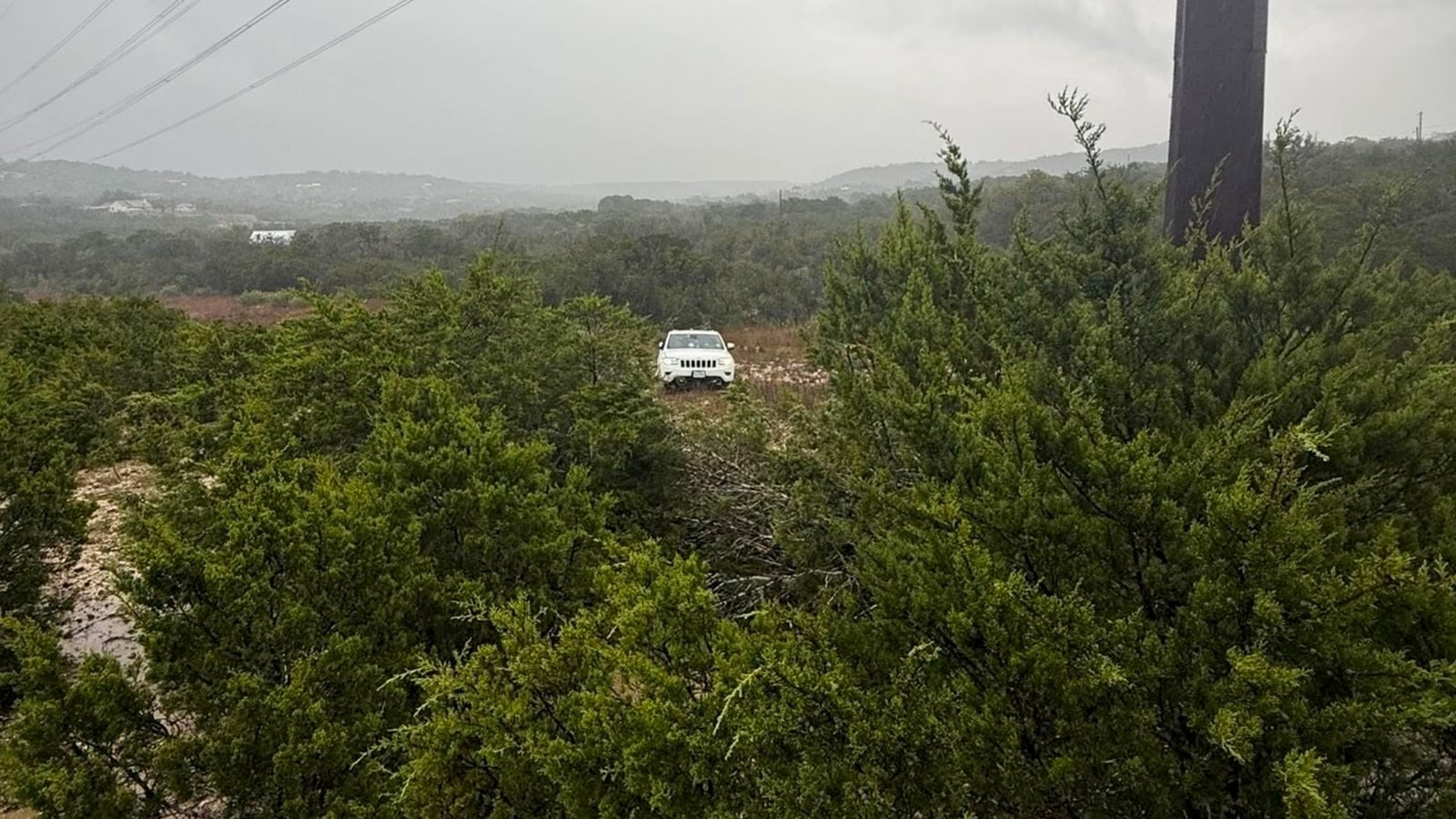
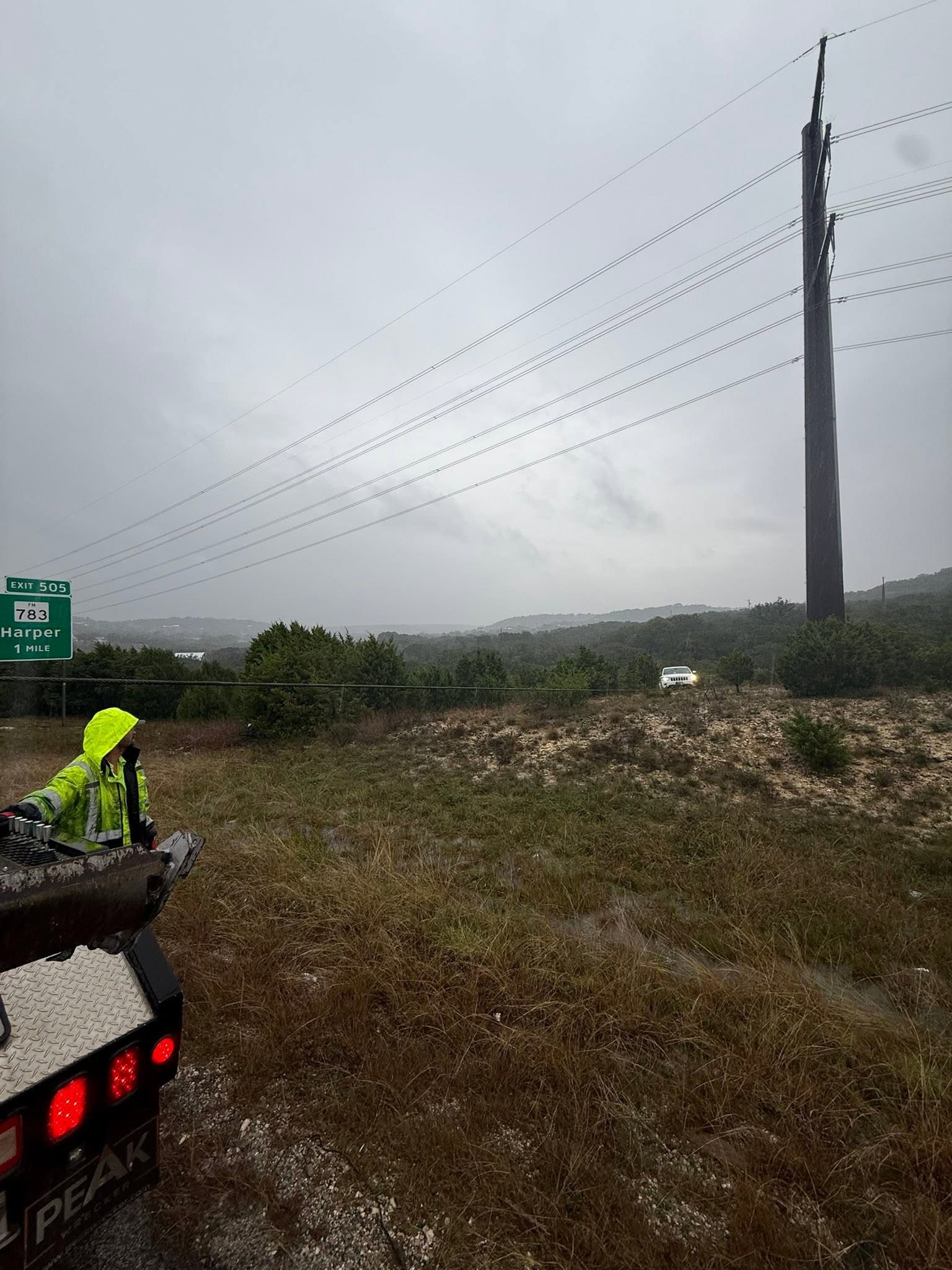
The vehicle hydroplaned on the interstate and came to rest about 75 feet off the road, back in the cedar, according to the Kerrville Police Department. Nobody was hurt.
Photos shared by KPD show the white vehicle sitting upright in the brush, well off the highway and surrounded by Ashe juniper, commonly referred to as cedar in the Texas Hill Country. It's a one-in-a-million landing, and everyone walked away from it.
"Our KPD team has responded to a handful of weather related minor accidents in town and this one up on IH 10, where a westbound vehicle hydroplaned and ended up about 75' back in the cedar. Fortunately no injuries. Please drive with caution," the department posted.
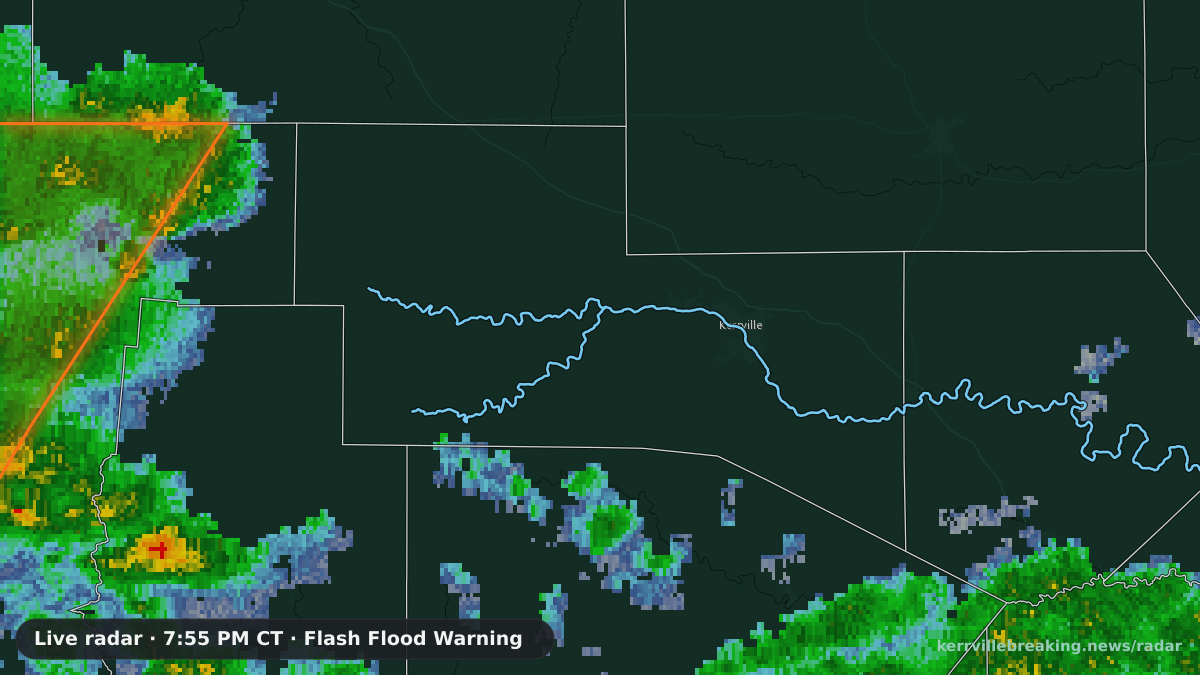
The wrecks come as a Flash Flood Warning was in effect for the South Fork and North Fork of the Guadalupe River in Kerr County (The NWS Flash Flood Warning has since been discontinued in Kerr and Real Counties, but remains in effect for Edwards and Val Verde Counties until 8 p.m.). The National Weather Service says 3 to 5 inches of rain have already fallen across the warned area, with up to 2 more inches possible, and warns of life-threatening flash flooding of creeks, streams and low water crossings. If you come to a flooded road, turn around, don't drown. Read the full warning.
How hydroplaning happens
Hydroplaning happens when a layer of water builds up between the tires and the road and the tires lose their grip. Three things make it more likely, according to the Texas Department of Insurance:
- Speed: The faster you go, the less grip your tires have and the harder the vehicle is to control.
- Water depth: The deeper the water, the sooner tires lose traction. Even a thin layer can do it at low speeds.
- Worn tires: Less tread means less ability to push water out of the way.
If you start to hydroplane
- Ease off the gas until the vehicle slows and the tires grab again. Don't slam the brakes.
- Gently steer in the direction of the skid, even if it feels wrong.
- When you feel the tires reconnect with the road, gently straighten the wheel.
- Brake as needed. With anti-lock brakes, brake normally. Without them, pump gently.
How to avoid it
- Slow down. TDI cites federal guidance to cut your speed by about a third in bad weather.
- Turn off cruise control so you're the one making adjustments.
- Leave room. Add five or six seconds of space behind the vehicle ahead — roughly double the usual cushion.
- Check your tires. Keep tread and pressure in good shape and check tread depth at least once a month.
- Stay out of standing water. Drive in the middle lanes where you can, since water pools at the edges, and never drive through a flooded road.
KPD's message is simple: slow down and drive with caution until the roads dry out.
And a thank-you is in order. While a lot of us are watching the radar and wondering whether the water will reach our homes — and what happens if it does — KPD officers are out in it, working a handful of weather-related wrecks across town. That goes for every first responder in Kerr County — police, deputies, troopers, firefighters, EMS and dispatchers alike. Sunshine, storms or rising rivers, they show up and keep this community safe. We're grateful for every one of them.
Source: Texas Department of Insurance — Driving in Bad Weather